
Septic tank service on Maui
Akamai Pumping Service helps diagnose and troubleshoot septic concerns and provides tank pumping and camera location service. Routine maintenance can address buildup before it affects how the system works. Septic problems may develop before plumbing symptoms appear, so a system that seems to be working normally may still need maintenance.
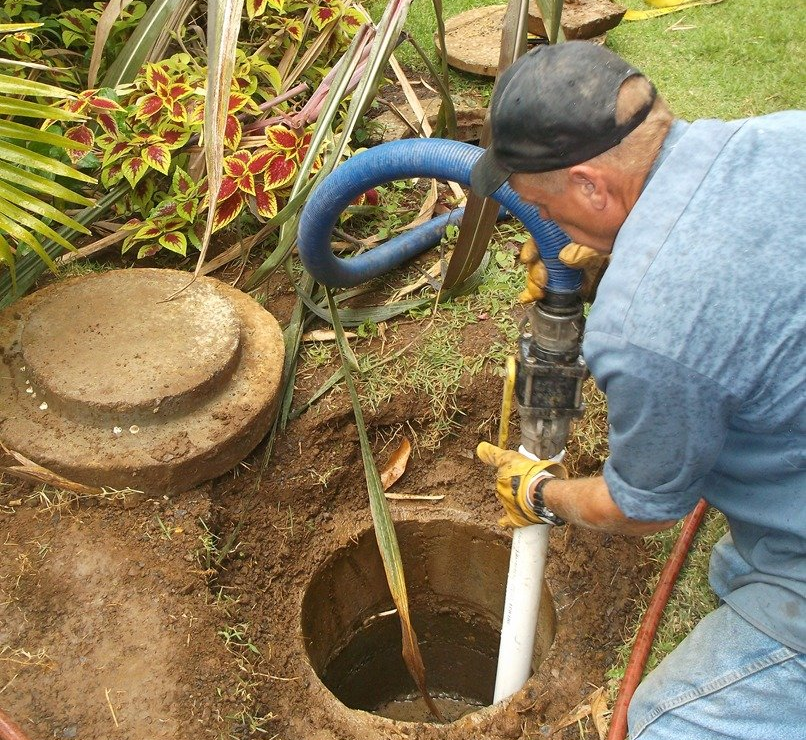
How a septic system works
A typical septic system has a tank divided into two chambers, followed by a leach field or leach pit that disperses liquid into the soil. The first chamber retains larger solids. Finer particles pass into the second chamber, where a sanitary tee helps keep solids from entering the outlet pipe and reaching the leach area. The tank normally holds liquid to the level of its outlet: liquid flows through while solids remain in the tank.
As solids build up, there is less room for separation inside the tank. Material that reaches the outlet and leach area can interfere with drainage, making it harder for wastewater to disperse into the soil. That can contribute to plumbing overflows and backups. Pumping removes accumulated material from the tank and is an important part of protecting the system's drainage function.
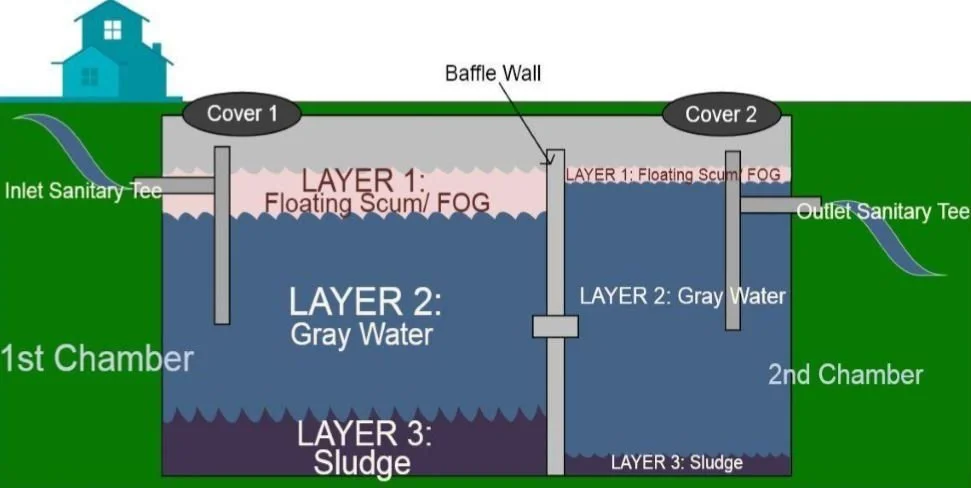
Septic system diagram showing the tank and drainage area.
Septic service questions
How often should my septic tank be pumped?
We suggest pumping about every three to five years. Household occupancy and frequency of use affect the schedule, so discuss your system with us when planning service. Regular pumping helps limit solids from reaching the leach field and may reduce the chance of more extensive repairs.
How large is a septic tank?
Many septic tanks are about 1,000 to 1,250 gallons; some are around 1,500 gallons. Tank size varies by installation, and the exact capacity can be confirmed for your system.
Where is my septic tank?
Look for an exposed concrete, plastic, or fiberglass cover near the lower part of the property. Septic systems generally use gravity flow, so the sewer line slopes downward toward the tank. Many systems have two access ports, often about 18 to 24 inches across and a few feet apart. Both ports need to be exposed for effective tank cleaning.
What if I can’t find my septic tank?
Landscaping may cover the tank or its access ports. We offer camera location service to help find and expose the access points so the tank can be serviced.
Why pump if everything seems fine?
Some systems show few symptoms until a problem has progressed. Regular maintenance helps manage solids before they interfere with the outlet or leach area. Keeping to a service schedule may help avoid more extensive work later.
What should I do if my system is backing up?
Stop using water and call us promptly. Running taps, flushing toilets or using water-consuming appliances adds more wastewater while the system is backing up. Tell us where the problem is happening and when it began so we can discuss whether septic pumping is appropriate.
Talk with us about septic service
Call (808) 873-7419 or visit our contact page to discuss pumping, access, or camera location service.