
Cesspool pumping and maintenance on Maui
Knowing what happens below ground can help you make better decisions about your home's wastewater system. As a cesspool ages, changes in drainage and household use can affect how well it handles incoming wastewater. Akamai Pumping Service helps Maui homeowners with cesspool pumping, buried access points and questions about a system's performance.
Maintenance starts with understanding the system you have. Its construction, depth, surrounding soil and history all matter when deciding what service it needs.
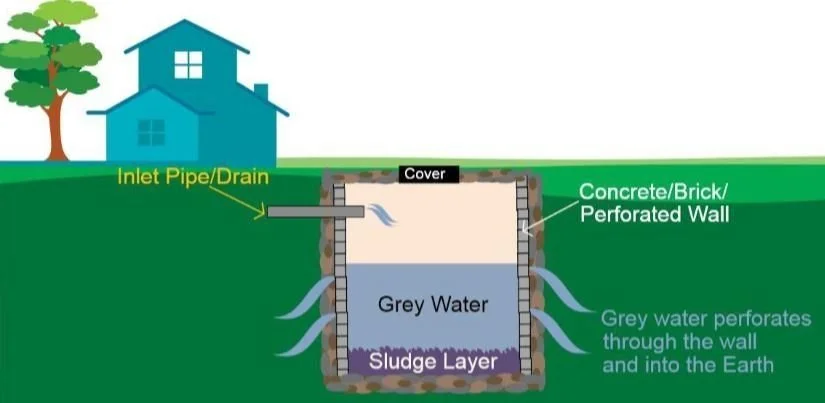
How a cesspool works
Wastewater from everyday household activities flows through the plumbing into the cesspool. Along with water, it may carry grease, food particles, solids and other material washed down the drains. Liquid seeps into the surrounding soil while material that does not drain away accumulates inside. A cesspool disperses wastewater; it does not provide the treatment of a modern wastewater treatment system.
The liquid level can rise as water enters and fall as it drains into the soil. Over time, accumulated material can restrict the surfaces where that drainage occurs. When the cesspool takes longer to drain, the level may stay higher between periods of household use.
A cesspool that remains full or repeatedly backs up may be struggling to absorb incoming wastewater and could be approaching the end of its useful service life. That condition deserves attention, but a high level alone does not identify the cause. Pumping can remove accumulated waste; it cannot guarantee that a failing drainage area will recover. Call us to discuss what you are noticing and whether our service fits the situation.
Common types of cesspools
Existing cesspools on Maui differ in how the underground opening was constructed. The three examples below help explain why access and service conditions vary from property to property.
Unlined excavation: A pit dug into the ground without a constructed wall lining.
Perforated concrete rings: A cesspool lined with reinforced concrete rings that have openings for liquid to pass into the surrounding soil.
Hollow-tile construction: A cesspool with a wall lining built from hollow concrete blocks, with openings that allow liquid to disperse.
These describe existing construction types. They do not establish the condition or suitability of an individual cesspool.
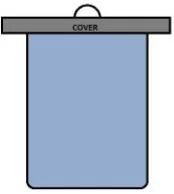
Illustration of an unlined, hole-in-the-ground cesspool.
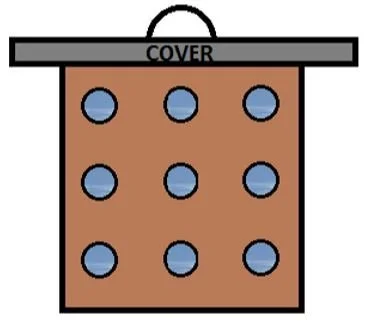
Perforated concrete ring construction.
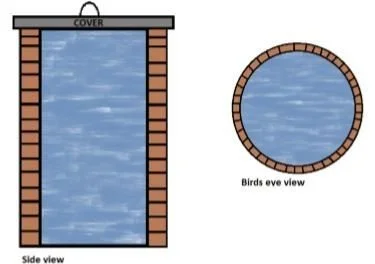
Hollow-tile wall lining with openings between the blocks.
Access ports and covers
The access port is the opening used to service the cesspool. On some older systems, it is covered by a square concrete plug, often about 6–12 inches across, with a rebar lifting handle. Other covers differ in shape and size. A visible cover can be a useful location clue, but the cover alone does not tell you the depth or condition of the system below.
Landscaping, soil and years of changes to a property can hide the service opening. Our camera location service can help trace the plumbing and locate and expose the access point. If repeated digging is needed for service, ask about riser installation to bring access closer to the surface.
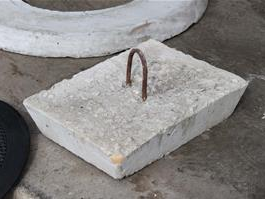
Square concrete access plug with a lifting handle.
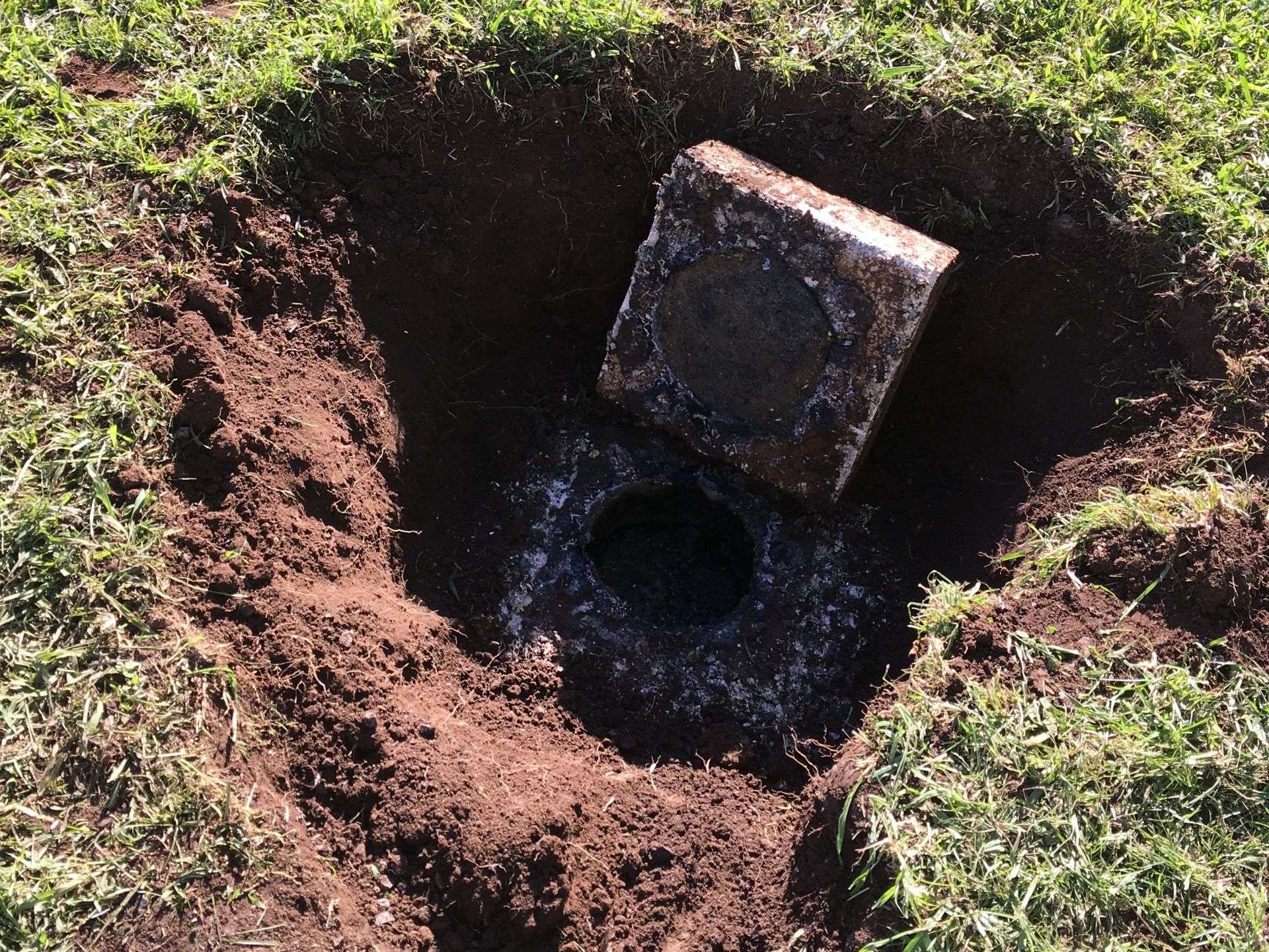
Exposed cesspool access opening.
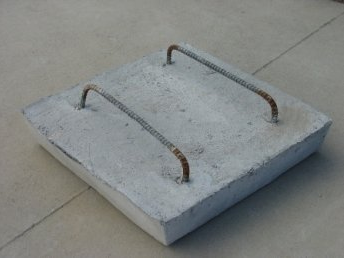
Concrete cover with two lifting handles.
Cesspool questions from homeowners
How often should my cesspool be pumped?
There is no single interval that works for every cesspool. Household water use, the system's location, its condition and its past service history all affect pumping needs. Cesspools also do not have a predictable expiration date. Let us know when yours was last serviced and whether its behavior has changed so we can discuss a suitable next step.
How deep is my cesspool?
Many older Maui cesspools are roughly 8–12 feet deep, but construction varies considerably. Some may be only about 4 feet deep, while others extend beyond 20 feet. The depth depends on the original excavation, so these examples should not be used to assume the dimensions of your system. The depth of the pit is also different from how far its access cover is buried.
Where should I look for my cesspool?
Visible concrete near a lower part of the property can be a starting clue. Gravity-fed sewer lines slope downward from the home, which can help explain a system's likely direction. A small square concrete plug with a metal handle may be the service port. Property layouts differ, so these are clues rather than a reliable way to pinpoint every cesspool. Leave lifting covers and exposing openings to the service crew.
What if I cannot find it?
It is common for a system to disappear beneath landscaping added after installation. You may also have inherited a property without records showing its location. Contact us about camera location: we can trace the plumbing to help find the buried access point and expose it for service. Share any plans, previous service records or information from an earlier owner if you have them.
What should I do if wastewater is backing up?
Stop using water and call (808) 873-7419 promptly. Continued flushing, washing or running taps adds wastewater to a system that is already backing up. Describe where the backup is happening, when it started and any recent pumping so we can discuss whether our services are appropriate. A backup can have more than one cause; pumping is not automatically the solution to every plumbing problem.
Talk with us about your cesspool
Whether you need a pump-out, help finding the opening or a conversation about a change in drainage, start with Akamai Pumping Service. Call (808) 873-7419 or contact us with your Maui location and the details of your system.